
What is an Opportunity Pipeline?
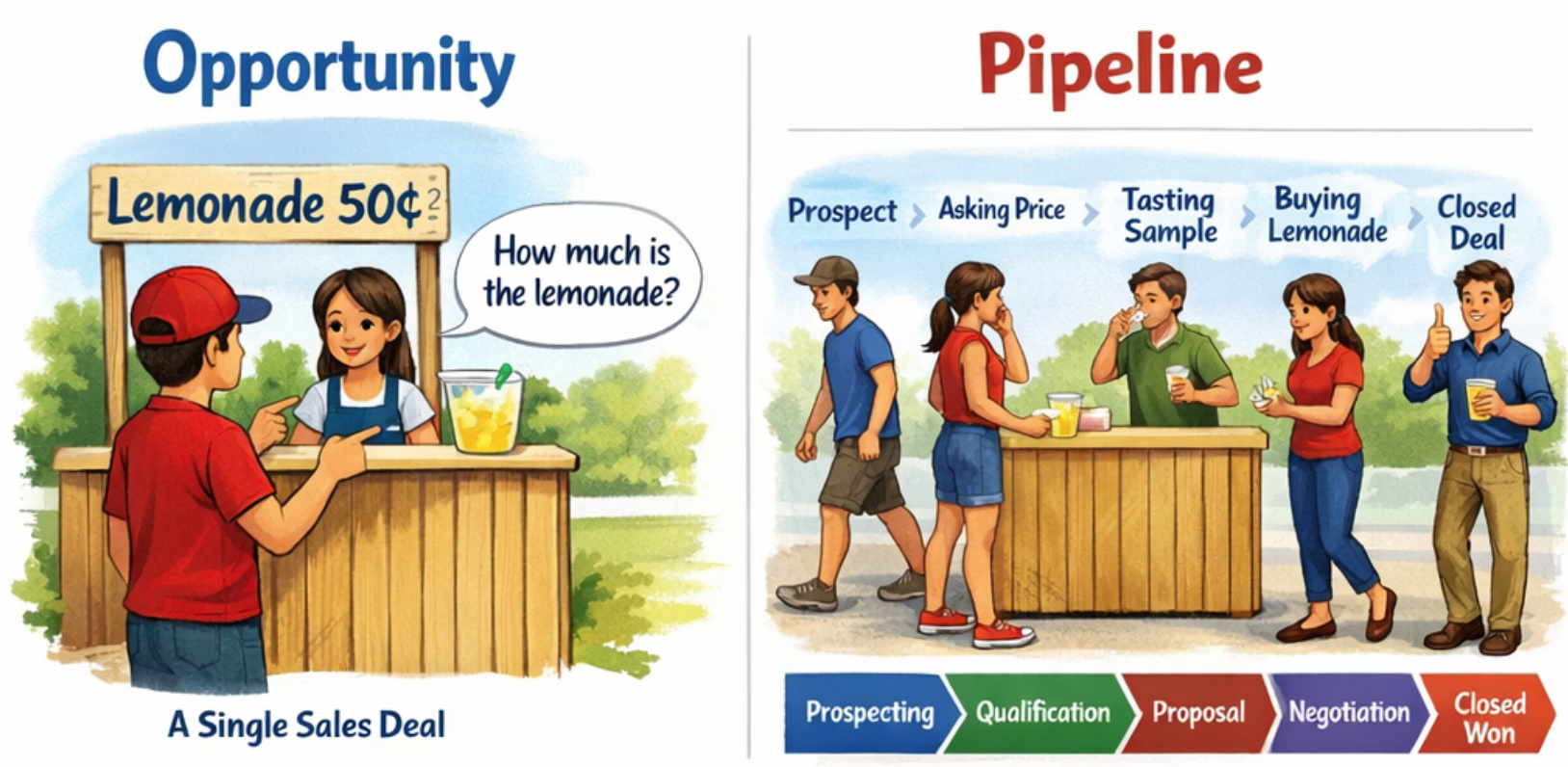
Here is a simplified explanation of opportunity pipelines, using a Lemonade stand as an example:
-
Opportunity:
An opportunity is like when you see someone walking by your stand who might want to buy your lemonade. Maybe they stop and look at your sign, or they ask how much it costs. That person is an opportunity (a chance for you to make a sale).
-
Pipeline:
The pipeline is like a line of people who might want to buy your lemonade. Some people are just looking, some are asking questions, and some are ready to buy. The pipeline helps you see where everyone is—are they just thinking about it, deciding, or did they already buy a cup of lemonade?
So, an opportunity is one person who might buy your lemonade, and the pipeline is the whole line of people, showing you who might buy, who is deciding, and who has already bought a cup of Lemonade!
| 🍋 Lemonade Stand | 💼 Your Business | |
|---|---|---|
| Opportunity | One person who might buy a cup | One potential deal with a qualified buyer |
| What makes it real | They stopped and asked the price | They have interest, budget, and authority |
| Its value | $1 (the price of a cup) | Expected revenue if the deal closes |
| Pipeline | The whole line of people at your stand | All open opportunities across all stages of your pipeline. |
| Why it matters | You know who to hand a cup to next | You know where to focus time and resources |
| The stages | Looking → Asking → Deciding → Buying | Prospecting → Qualification → Proposal → Negotiation → Closed |
Here is the same explanation, but using business terms:
In the context of sales and opportunity management, an opportunity and a pipeline serve distinct roles but are closely related.
Opportunity: An opportunity is a potential sale or business deal that has a high likelihood of closing. It represents a chance to offer your product or service to an interested individual or business, often originating from a lead or an existing customer.
Characteristics: Opportunities are typically qualified based on factors like the prospect's interest, budget, and decision-making authority. They are assigned a value reflecting the potential revenue if the deal is closed.
Progression: Opportunities move through various stages in the sales process, such as prospecting, qualification, and negotiation, until they are either won or lost.
Pipeline: A pipeline is a visual representation of the sales process, showing all stages a customer goes through from initial contact to becoming a paying customer. It organizes and tracks opportunities as they progress toward a sale.
Function: Pipelines help manage multiple opportunities simultaneously, providing insights into which deals are most likely to close and allowing for strategic resource allocation.
Stages: Pipelines are divided into stages, each representing a step in the sales process. These stages can include prospecting, proposal, negotiation, and closing.